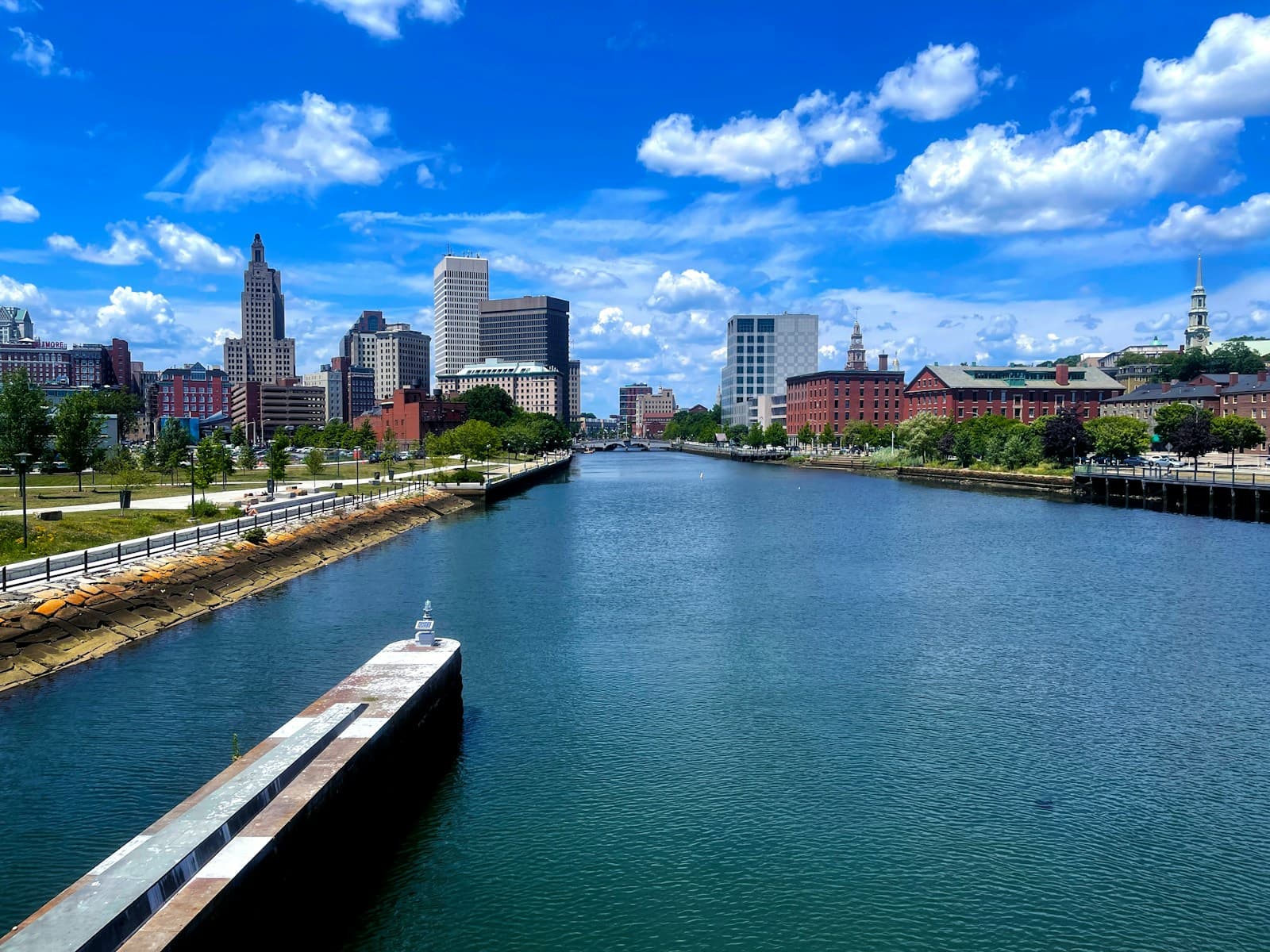
What Affects Rates in Providence
- Downtown Providence Traffic Density: The convergence of I-95, Route 6, and Route 10 through downtown creates congestion hotspots at Kennedy Plaza and the Providence Place area, elevating collision frequency for high-risk drivers. Carriers apply urban density multipliers that typically add 12–18% to base premiums for drivers with at-fault accidents on record.
- College Student Population: Brown University and RISD concentrate young drivers in the East Side and College Hill neighborhoods, contributing to higher uninsured motorist claims in these ZIP codes. Post-SR22 drivers shopping for uninsured motorist coverage in 02906 and 02912 often see 8–15% higher premiums than suburban Johnston or Cranston.
- Winter Weather Claims Frequency: Providence averages 35 inches of snow annually, with nor'easters creating multi-day ice conditions on hills like Benefit Street and Angell Street. Comprehensive coverage for drivers with prior at-fault accidents reflects this elevated weather-related claim risk, typically costing $40–$75/month more than liability-only.
- DMV Reinstatement Process Timing: Rhode Island DMV processes SR-22 terminations within 10–15 business days after the three-year requirement ends, but drivers must request a certified driving abstract to confirm the filing is removed before shopping standard carriers. Delays in obtaining this abstract can extend non-standard rates by 30–60 days.
- Port and Industrial Corridor Risk: The Port of Providence and Route 10 industrial corridor generate heavy commercial truck traffic through neighborhoods like Olneyville and Valley, increasing severity of collisions. High-risk drivers with DUI or reckless driving convictions working or commuting through these corridors face 10–20% higher liability limits recommendations from underwriters.

Find out exactly how long SR-22 is required in your state
Coverage Recommendations
Cost estimates are based on available industry data and vary by driver profile. These are not insurance quotes.
Liability Insurance
Rhode Island requires 25/50/25 minimums, but post-SR22 drivers in Providence should consider 100/300/100 limits given the city's congestion and higher-income neighborhoods like the East Side where collision settlements exceed state minimums. Raising limits from minimum to 100/300/100 typically costs an additional $30–$50/month but prevents out-of-pocket exposure in at-fault accidents.
$75–$140/mo for 100/300/100 post-SR22Estimated range only. Not a quote.
Uninsured Motorist Coverage
Providence's student population and economically diverse neighborhoods contribute to uninsured driver encounters, particularly in South Providence and Olneyville. Post-SR22 drivers should match their uninsured motorist limits to liability limits (100/300) to protect against hit-and-run or underinsured claims—this coverage typically adds $25–$45/month in Providence.
$25–$45/mo for 100/300 UMEstimated range only. Not a quote.
Comprehensive Coverage
Winter nor'easters, street parking in Federal Hill and College Hill, and property crime in certain ZIP codes make comprehensive coverage essential for financed vehicles. Drivers transitioning off SR-22 with vehicles worth over $8,000 typically pay $50–$90/month for comprehensive with a $500 deductible, recovering equity protection lost during the non-standard period.
$50–$90/mo with $500 deductibleEstimated range only. Not a quote.
Full Coverage
Full coverage (liability + collision + comprehensive) for post-SR22 drivers in Providence typically runs $180–$320/month in the first year after the filing ends, dropping to $140–$240/month by year two as the violation ages. Standard carriers begin offering full coverage quotes once the SR-22 is removed and no new violations occur for 12 months.
$180–$320/mo first year post-SR22Estimated range only. Not a quote.