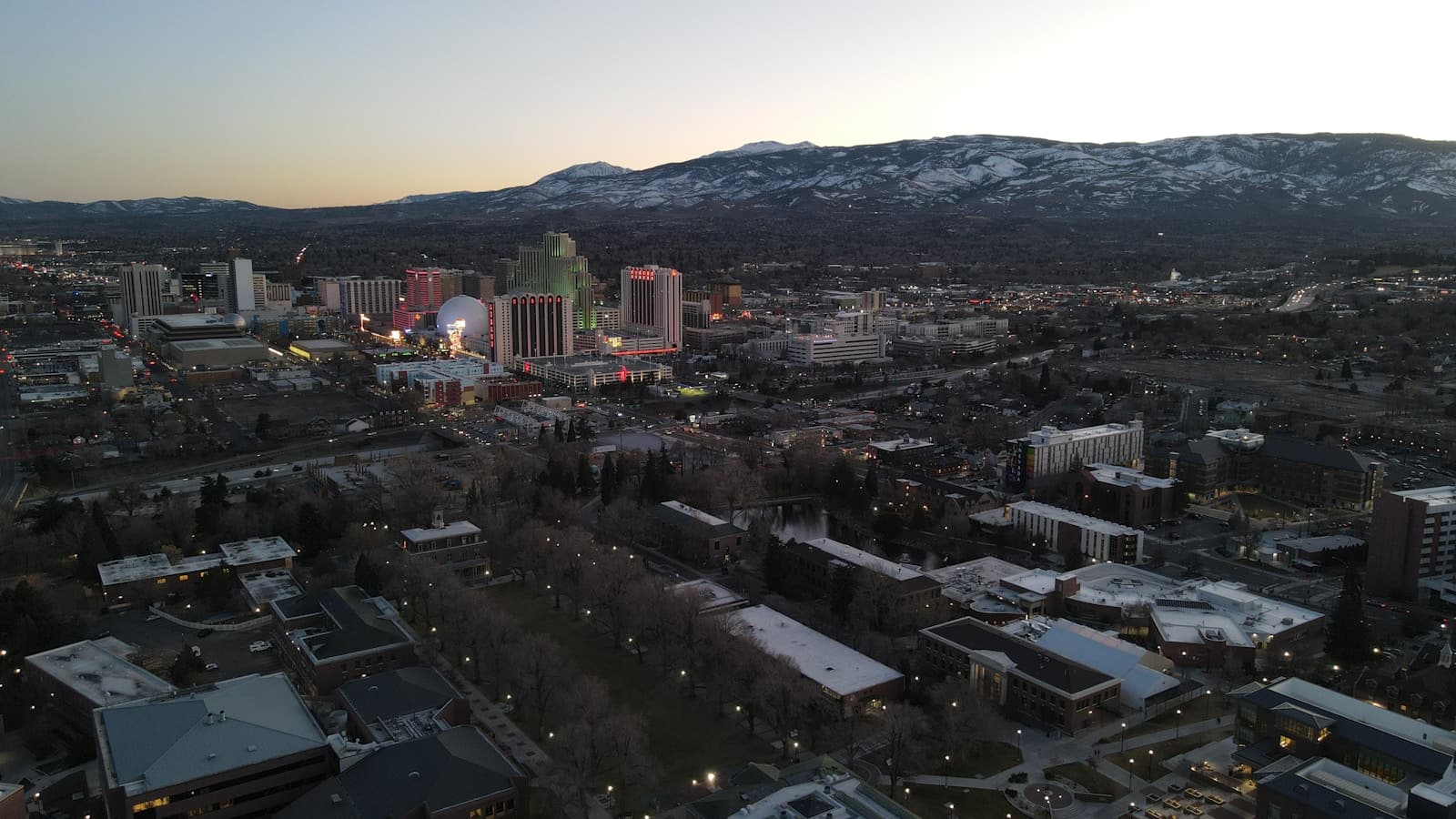
What Affects Rates in Reno
- I-80 and US-395 Corridor Traffic Density: Reno sits at the intersection of I-80 (main east-west route) and US-395, creating high-speed merging zones where violation history weighs heavier in underwriting. Post-SR22 drivers with clean records for 12+ months see faster rate drops here than in rural Nevada because carriers price urban corridors separately.
- Washoe County Court System Processing: DUI and reckless driving cases processed through Reno Justice Court and Washoe County District Court appear on Nevada DMV records within 10–15 days of conviction, which starts your SR-22 clock. Drivers transitioning off SR-22 should confirm with Nevada DMV that the filing termination is recorded before shopping, as delayed updates can trigger quote rejections.
- Winter Weather Impact on Comprehensive Claims: Reno averages 22 inches of snow annually, concentrated November–March, which increases comprehensive claims for drivers maintaining full coverage during SR-22 periods. Post-SR22 drivers with no weather-related claims during their filing period qualify for better comprehensive rates than those with multiple winter incidents.
- Tourism and Seasonal Population Fluctuations: Reno's casino district and proximity to Lake Tahoe create seasonal traffic spikes that affect accident frequency rates used in underwriting. Carriers writing post-SR22 business in Reno factor in higher weekend and holiday collision exposure, which means liability limits matter more here than in smaller Nevada cities.
- Nevada Uninsured Motorist Rate: Approximately 11% of Nevada drivers operate uninsured, slightly above the national average. Post-SR22 drivers in Reno should prioritize uninsured motorist coverage since you've already proven financial responsibility — protecting that compliance history from an uninsured at-fault driver is critical.

Find out exactly how long SR-22 is required in your state
Coverage Recommendations
Cost estimates are based on available industry data and vary by driver profile. These are not insurance quotes.
Liability Insurance
Nevada requires 25/50/20 minimums, but post-SR22 drivers in Reno should carry 100/300/50 or higher. Your SR-22 period proved financial responsibility — protecting that record with higher limits costs $15–$30/mo more but shields you from a second suspension if you're in a serious accident on I-80 or US-395.
$45–$95/mo for state minimums; $65–$125/mo for 100/300/50Estimated range only. Not a quote.
Uninsured Motorist Coverage
With 11% of Nevada drivers uninsured, this coverage protects the compliance record you just completed. If an uninsured driver hits you in Reno and you lack UM coverage, you're paying out-of-pocket for injuries and repairs — exactly what SR-22 was designed to prevent in the first place.
$10–$25/mo added to liability policyEstimated range only. Not a quote.
Full Coverage
Liability + collision + comprehensive. Post-SR22 drivers financing vehicles in Reno need full coverage, and rates drop significantly once the filing ends. Expect $140–$260/mo in your first year off SR-22 compared to $200–$380/mo during the filing period, assuming no new violations.
$140–$260/mo first year post-SR22Estimated range only. Not a quote.
Comprehensive Coverage
Covers non-collision damage — theft, vandalism, weather, animal strikes. Reno's winter snow and proximity to wildlife corridors (deer on US-395 north of the city) make this relevant. Post-SR22 drivers with no comprehensive claims during their filing period qualify for standard rates: $25–$50/mo depending on vehicle value.
$25–$50/mo for most vehiclesEstimated range only. Not a quote.