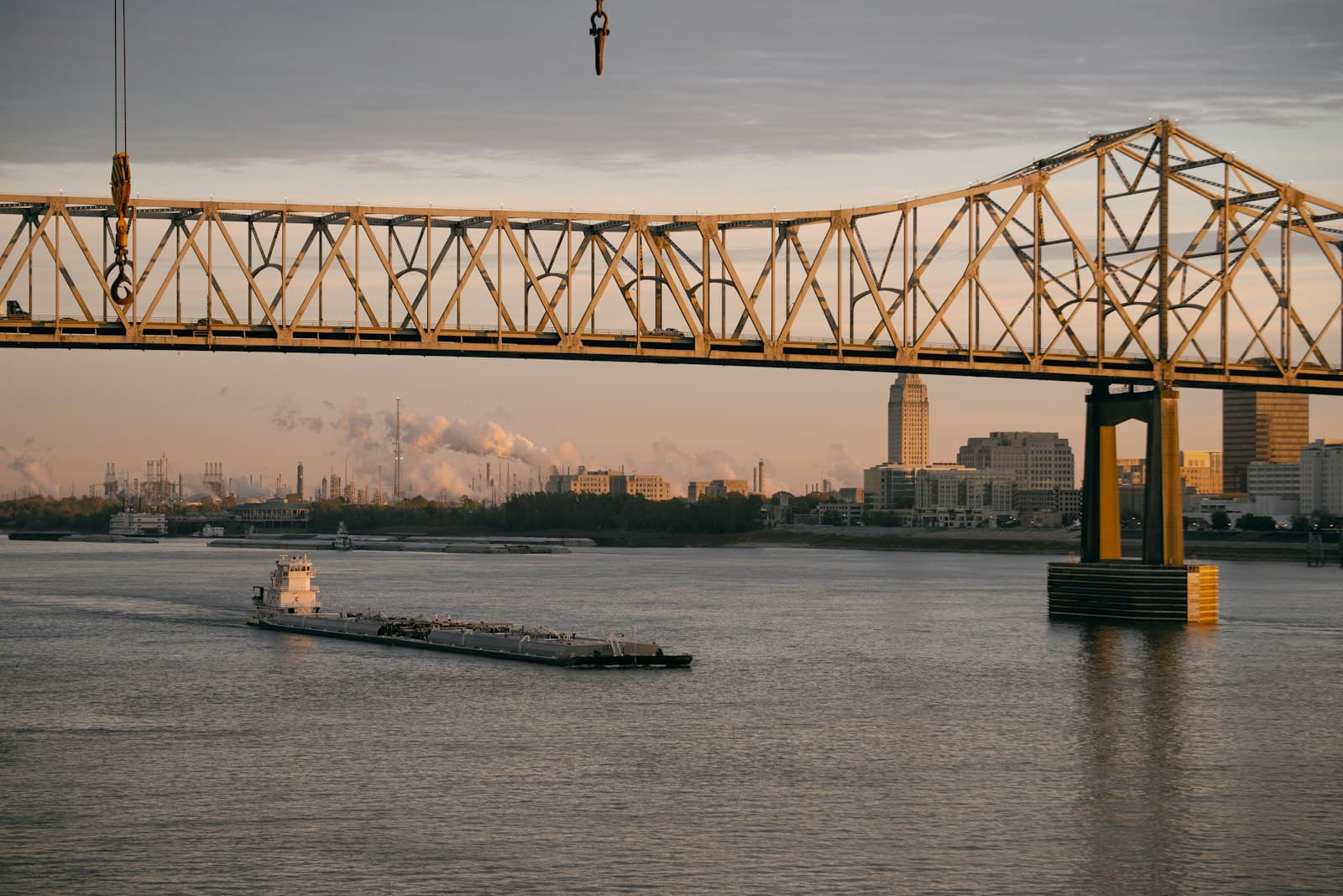
What Affects Rates in Baton Rouge
- High Uninsured Motorist Concentration: Louisiana ranks among the top five states for uninsured drivers at approximately 28%, with higher concentrations in East Baton Rouge Parish urban corridors along I-10 and Airline Highway. Post-SR22 drivers often see uninsured motorist coverage add $15–$35/mo, but carriers view this coverage favorably when transitioning from non-standard policies.
- I-10 Corridor Accident Density: The I-10/I-110 interchange and College Drive area register elevated accident frequency, particularly during LSU event traffic and petrochemical shift changes. Carriers price ZIP codes near these corridors 8–15% higher even after SR-22 ends; drivers in 70808 and 70820 may see slower rate normalization than those in 70810 or 70817.
- Flood Zone Rating Impact: Comprehensive coverage costs 20–40% more in FEMA flood zones near the Mississippi River levee and Amite River tributaries. Post-SR22 drivers dropping to liability-only should know that comprehensive typically adds $40–$75/mo in flood-prone ZIPs, but bundling it can unlock better liability rates from standard carriers.
- Louisiana OMV SR-22 Notification Process: The Louisiana Office of Motor Vehicles requires your insurer to electronically file SR-22 termination, but does not automatically notify you when the three-year period ends. You must request a driving record abstract from OMV to confirm your SR-22 obligation has been lifted before shopping standard carriers.
- Post-Katrina Non-Standard Market Depth: Baton Rouge absorbed significant post-Katrina population growth, which expanded the non-standard and SR-22 carrier presence in the metro. This creates more competition for post-SR22 drivers transitioning to standard insurance, particularly from regional carriers like Louisiana Farm Bureau and GEICO's standard tier.

Find out exactly how long SR-22 is required in your state
Coverage Recommendations
Cost estimates are based on available industry data and vary by driver profile. These are not insurance quotes.
Liability Insurance
Louisiana requires 15/30/25 minimums, but post-SR22 drivers should carry 50/100/50 or higher when transitioning to standard carriers — many will not quote below these limits for drivers with recent SR-22 history. Liability-only policies in Baton Rouge run $95–$160/mo in the first year after SR-22 ends, compared to $140–$280/mo during the filing period.
$95–$160/mo liability-only, first year post-SR22Estimated range only. Not a quote.
Uninsured Motorist Coverage
With nearly 28% of Louisiana drivers uninsured and higher concentrations along Baton Rouge's Plank Road and Scenic Highway corridors, uninsured motorist coverage is essential for post-SR22 drivers. Standard carriers often bundle UM/UIM at reduced rates when you increase liability limits, adding $20–$40/mo for 50/100 coverage.
$20–$40/mo for 50/100 UM/UIMEstimated range only. Not a quote.
Full Coverage
Full coverage (liability + collision + comprehensive) for post-SR22 drivers in Baton Rouge typically costs $180–$320/mo in the first 12 months after filing ends, depending on vehicle value and ZIP code. This is 30–45% lower than SR-22-period rates, and drops further at the 12-month and 24-month shopping points if no new violations occur.
$180–$320/mo first year post-SR22Estimated range only. Not a quote.
Comprehensive Coverage
Baton Rouge's flood risk, hail exposure during spring severe weather, and elevated vehicle theft rates in certain ZIP codes make comprehensive essential even for post-SR22 drivers with older vehicles. Comprehensive adds $50–$90/mo for a $10,000 vehicle with $500 deductible, but bundling with collision often reduces the combined cost by 15–20%.
$50–$90/mo for $10k vehicleEstimated range only. Not a quote.