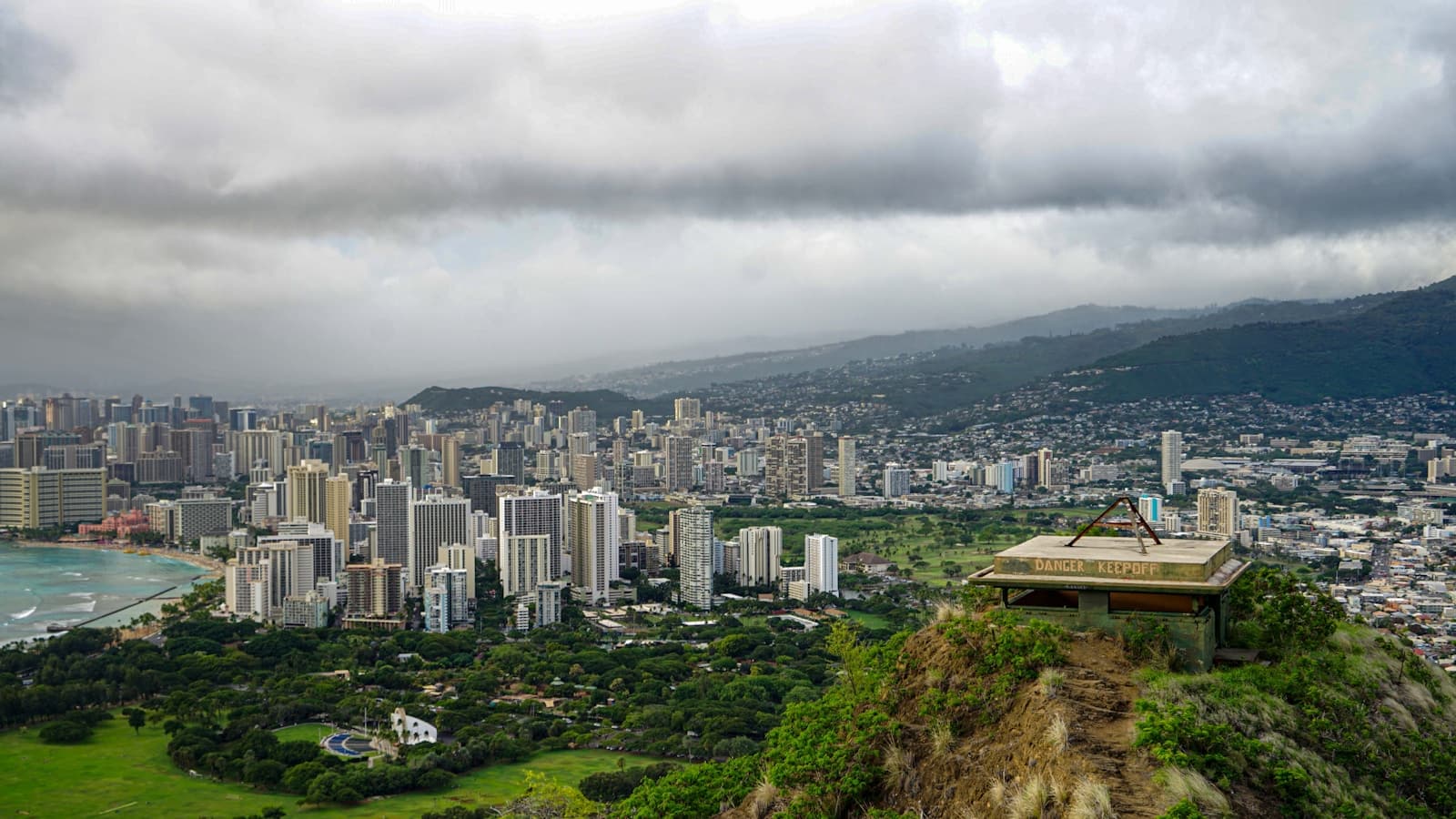
What Affects Rates in Honolulu
- Urban Congestion and Accident Frequency: Honolulu's dense urban core and H-1 corridor congestion create elevated accident frequency compared to neighbor islands. Post-SR22 drivers face 15–25% higher premiums than rural Hawaii locations due to claim frequency data tied to ZIP codes in downtown, Waikiki, and Pearl City.
- No-Fault PIP Requirement: Hawaii's no-fault system requires $10,000 minimum Personal Injury Protection, adding $40–$80/mo to base premiums. Post-SR22 drivers cannot waive PIP, and carriers price this coverage higher for those with recent violations due to medical claim payout risk.
- Uninsured Driver Concentration: Honolulu's estimated uninsured motorist rate of 10–12% drives up uninsured motorist coverage premiums for high-risk drivers. Carriers charge $25–$50/mo more for UM/UIM coverage when your record shows a lapse or suspension, as you're statistically more likely to encounter another uninsured driver.
- Limited Carrier Competition: Hawaii's island geography limits the number of carriers writing high-risk and post-SR22 policies compared to mainland markets. This reduced competition keeps post-SR22 rates 10–20% higher than comparable metro areas, making immediate shopping after filing ends critical to find the 3–4 carriers actively competing for your tier.
- Tourism Traffic and Rental Vehicle Interactions: Waikiki and airport corridor areas see elevated not-at-fault claims from tourist driver interactions. If you live or commute through ZIP codes 96815, 96814, or near HNL, expect underwriters to apply a 5–10% surcharge even post-SR22 due to claims frequency in these zones.
Find out exactly how long SR-22 is required in your state
Coverage Recommendations
Cost estimates are based on available industry data and vary by driver profile. These are not insurance quotes.
Liability Insurance
Hawaii requires 20/40/10 minimums, but post-SR22 drivers should carry 100/300/100 to demonstrate responsibility to future insurers and protect assets. Honolulu's congestion and no-fault system make higher liability limits essential—expect $90–$180/mo for 100/300/100 in your first year post-filing.
$90–$180/mo for 100/300/100Estimated range only. Not a quote.
Uninsured Motorist Coverage
With Honolulu's 10–12% uninsured driver rate, UM/UIM coverage is critical for post-SR22 drivers who cannot afford another claim on their record. Carriers charge $30–$65/mo for 100/300 UM/UIM limits when you have a recent violation, but this coverage protects you from out-of-pocket costs if hit by an uninsured tourist or lapsed local driver.
$30–$65/mo for 100/300 limitsEstimated range only. Not a quote.
Full Coverage
Full coverage (liability + comprehensive + collision) for post-SR22 drivers in Honolulu typically costs $210–$380/mo depending on vehicle value and deductible selection. If you financed your vehicle during SR-22, maintaining full coverage shows rate stability to standard carriers when you shop 12–18 months post-filing.
$210–$380/mo with $500–$1,000 deductiblesEstimated range only. Not a quote.
Comprehensive Coverage
Honolulu's salt air, flood risk in low-lying areas, and vehicle theft rates in certain neighborhoods make comprehensive coverage valuable even for post-SR22 drivers with older vehicles. Expect $40–$85/mo with a $500 deductible; choosing $1,000 deductible drops cost to $25–$55/mo while maintaining lender requirements.
$40–$85/mo with $500 deductibleEstimated range only. Not a quote.