
SR-22 for CDL Holders: What Commercial Drivers Need to Know
Find Affordable Coverage After SR-22Does a Personal SR-22 Requirement Affect Your CDL Status?
The SR-22 filing itself does not suspend or revoke your CDL. It is an administrative proof-of-insurance certificate tied to your personal auto policy, not your commercial driving privileges.
The violation that triggered the SR-22 requirement is the threat. A DUI, reckless driving conviction, or accumulation of serious traffic violations on your personal driving record creates a reportable event under Federal Motor Carrier Safety Regulations. Your state DMV maintains separate records for your personal driver license and your commercial license, but both records feed into the FMCSA's Drug and Alcohol Clearinghouse and the National Driver Register.
If the triggering violation meets FMCSA disqualification thresholds, your CDL can be suspended or downgraded regardless of whether you comply with the SR-22 requirement. The SR-22 filing keeps your personal license valid. It does not cure a disqualifying offense on your commercial record.
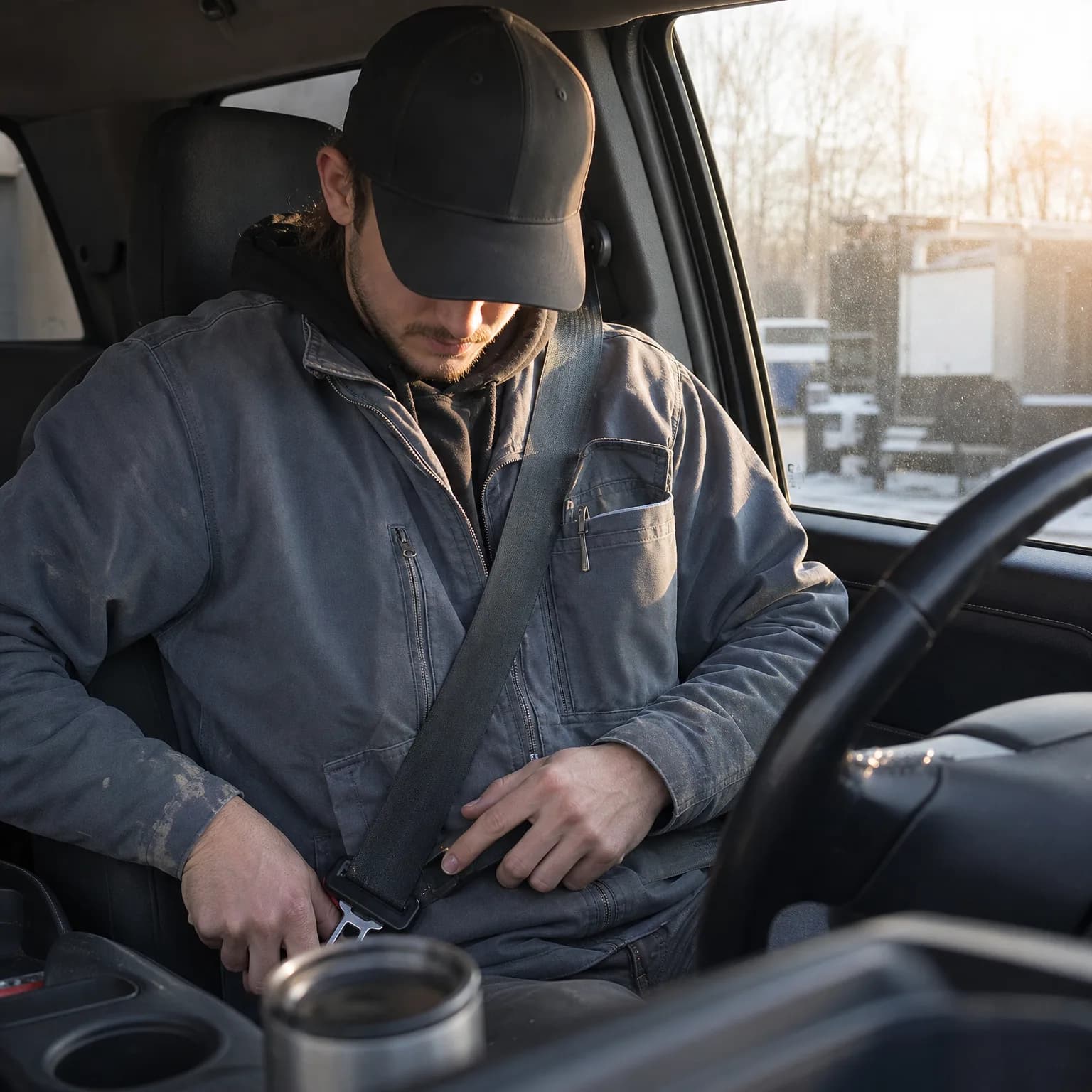
What Your Employer Sees and When They See It
Most commercial carriers pull your MVR annually or semi-annually as part of their DOT compliance program. That pull includes your personal driving record. The SR-22 filing itself does not appear as a standalone line item on most state MVRs, but the conviction that required it does.
Your employer will see the DUI, suspension, or serious violation during the next scheduled pull. If the violation occurred within the last three years and meets their internal safety policy threshold, you may face disciplinary action, reassignment to non-driving duties, or termination depending on your carrier's risk tolerance and insurance underwriting requirements.
Some violations require self-reporting within 30 days under FMCSA rules. A DUI conviction, for example, must be reported to your employer within 30 days of conviction regardless of whether it occurred in a personal vehicle. Failing to self-report a disqualifying event is itself a violation and can result in immediate termination for cause.


How Personal and Commercial Insurance Interact Under SR-22
Your personal SR-22 policy covers your personal vehicle only. It does not extend to the commercial vehicle you drive for work, and it does not satisfy your employer's commercial auto liability policy.
Your employer's commercial policy is not affected by your personal SR-22 requirement unless the underwriter re-evaluates your eligibility as a covered driver after learning of the violation. Some commercial policies exclude drivers with recent DUIs or serious violations. Others impose a surcharge on the employer's premium or require the employer to carry higher liability limits to keep you insurable.
If your personal SR-22 lapses, your personal driver license suspends. That suspension disqualifies you from operating a commercial vehicle even if your CDL itself was not suspended. You cannot drive commercially without a valid base driver license.
State-Specific CDL Implications for SR-22 Filers
Most states use the same SR-22 filing period for CDL holders as for non-commercial drivers, typically three years from the date of conviction. A few states impose longer filing periods or additional reinstatement requirements for commercial drivers.
California, for example, requires a longer DUI suspension period for commercial drivers even when the offense occurred in a personal vehicle. The SR-22 filing period runs concurrently with the suspension, but reinstatement of the CDL requires completion of a DUI program, proof of SR-22, and payment of a commercial license reissue fee separate from the personal license reinstatement fee.
Texas differentiates between personal and commercial disqualifications but applies the same SR-22 filing structure to both. If your personal DUI triggers a CDL disqualification under federal rules, the disqualification period and the SR-22 filing period may not align. You may complete your SR-22 requirement while still disqualified from commercial driving.

Your SR-22 Is Over. Your Rate Should Drop Too
Find Affordable Coverage After SR-22
Which Carriers Write SR-22 for CDL Holders
Most high-risk carriers that write SR-22 policies do not differentiate between CDL holders and non-commercial drivers for personal auto coverage. Your CDL status does not automatically disqualify you from obtaining SR-22 insurance, but it may narrow your carrier options if the violation also appears on your commercial record.
Progressive, The General, and National General actively write SR-22 policies in most states and do not exclude CDL holders. Some regional carriers and state-assigned risk pools also accept CDL holders with recent violations, though rates may be higher if the carrier views your occupation as increasing liability exposure.
A small number of carriers decline to write personal SR-22 policies for CDL holders with DUI convictions, viewing the commercial driving occupation as compounding the risk. If you are declined by multiple standard high-risk carriers, contact your state's assigned risk plan directly. All states provide a coverage mechanism of last resort for drivers who cannot obtain voluntary market coverage.

How to Maintain CDL Eligibility During Your SR-22 Period
Keep your personal SR-22 policy active without any lapses. A single day of lapse resets your filing clock to zero in most states and triggers an immediate personal license suspension, which disqualifies you from commercial driving.
Report any new traffic violations to your employer within the required timeframe even if they occur off-duty. Accumulating additional violations during your SR-22 period can trigger a CDL disqualification separate from your personal license status.
Request a copy of your personal MVR and your commercial driving record every six months. Compare them to confirm that all convictions, suspensions, and reinstatements are accurately reflected. Errors on your commercial record can delay reinstatement or trigger incorrect disqualification.
What Happens When Your SR-22 Period Ends
When your SR-22 filing period ends, your personal insurance carrier notifies your state DMV. Your personal license returns to standard status, and you are no longer required to carry SR-22 coverage.
Your CDL status depends on whether the underlying violation triggered a separate commercial disqualification. If the disqualification period was longer than the SR-22 filing period, your CDL remains suspended or downgraded until the full disqualification period is served and you complete any required reinstatement steps.
If the disqualification period and SR-22 period aligned, your CDL returns to full privileges once the SR-22 requirement ends and you confirm reinstatement with your state DMV. Most states do not automatically reinstate a CDL after a disqualification — you must apply for reinstatement, pay a reissue fee, and in some cases retake the CDL knowledge or skills test.
Frequently Asked Questions
Will my employer find out about my SR-22 requirement?
Your employer will not see the SR-22 filing itself, but they will see the violation that triggered it when they pull your MVR. Most commercial carriers pull driving records annually or semi-annually as part of DOT compliance. If the violation occurred within the last three years, it will appear on that pull.
Can I keep driving commercially if I have an SR-22 on my personal license?
Yes, as long as the violation that triggered the SR-22 does not meet FMCSA disqualification thresholds and your employer's insurer allows it. The SR-22 filing itself does not suspend your CDL. The underlying violation is what determines your commercial driving eligibility.
Does SR-22 insurance cover the commercial vehicle I drive for work?
No. Your personal SR-22 policy covers your personal vehicle only. It does not extend to commercial vehicles or satisfy your employer's commercial liability policy. Your employer carries separate commercial auto insurance for the vehicles you operate on the job.
What happens to my CDL if my SR-22 policy lapses?
If your personal SR-22 lapses, your personal driver license suspends immediately. That suspension disqualifies you from operating a commercial vehicle even if your CDL itself was not suspended. You cannot drive commercially without a valid base driver license.
Do I have to tell my employer I have an SR-22 requirement?
FMCSA rules require you to report certain violations to your employer within 30 days of conviction, including DUIs and serious traffic offenses. The SR-22 requirement itself is not a reportable event, but the violation that caused it likely is. Check your company's safety policy and federal reporting requirements for your specific situation.
Related Articles

SR-22 and CDL Renewal: Medical Certs and Convictions
5/18/2026

SR-22 for Owner-Operators: Personal vs Commercial Filing
5/18/2026

Do You Disclose SR-22 to a New Employer? What They See
5/18/2026

SR-22 for Company Cars After a Personal DUI
5/18/2026

Will SR-22 Show Up on a Background Check? What Employers See
5/18/2026

SR-22 on MVR: What Employers See During Background Checks
5/18/2026